The logo of the actors union Equity features a pair of masks, one smiling and one frowning. This traditional symbol has long been associated with drama and represents the ancient Greek Muses of Thalia and Melpomene, the muses of comedy and tragedy.

Masks were first used to enable actors, who were originally all men, to play a variety of male and female characters and differentiate between them with a mask for each. Not a disguise as such, but a way of hiding the actor’s own features, and presenting an alternative face to the world.

More recently, comedienne & ventriloquist Nina Conti has put face masks on volunteers from her audience that cover the lower half of their faces. Conti uses a hand piece to manipulate the mask and make it appear as if the volunteer is talking. The voice that the audience hears is Conti’s. Although the mouth its movement and the words that come from it are disguised, the eyes of the volunteer remain on view. and display emotions that range from detached amusement to abject horror.

Masks enable people to do and say things that they wouldn’t normally say or do. There is something anonymous about them. Genuine emotions and feelings can remain hidden.

The putting on of a metaphorical mask in everyday encounters is something that many people do without ever really realising. Whether the mask they wear is the role that they inhabit as teacher or parent, or situational at a funeral or with difficult family members, masks cover what we don’t want to be seen.

Despite our own habit of putting on a mask, we want to know the truth behind those that others wear. Whether it’s our politicians or our religious leaders, we want to know what they really think, what actually makes them tick, their genuine opinions not their carefully crafted media soundbites. We value authenticity highly.

God knows what we are like behind the mask.  There is no need to put on a front to hide how we feel or disguise our emotions. He loves us just the same.

June 2018
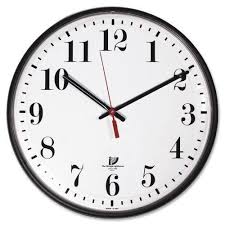
The Shepherd Gate clock that is mounted on the wall outside the gate of the Royal Observatory in Greenwich is unusual in one key respect. Designed to display Greenwich Mean Time to the public the clock, that was constructed and installed in 1852, has a 24 hour analog dial rather than the usual 12. Originally the clock indicated astronomical time, where the counting of the hours starts each day at noon. In the 20th century this was changed to the more familiar system of the counting of the hours beginning at midnight.

Dividing the day into hours was a common system in many parts of the worlds for centuries before the arrival of Greenwich Mean Time. The ancient Egyptians began splitting the night into intervals in the 24th century BC, and a 1000 years later had devised a system of 12 hours in a day using sundials to mark the passage of time.

By the time of the Old Testament in the bible, the changing position of the shadows made by the sun as a means to tell the time was a familiar concept. In the books of both 2 Kings and Isaiah we hear how God caused the shadow cast by the sun on the ‘stairway of Ahaz’ – probably a sundial of sorts – to move back ten steps as a sign that he would keep a promise he makes to Hezekiah the king.

Keeping precise time is not something that seems to concern many of the characters whose lives spring from the pages of the bible. What they are more interested in is seeking out when God is going to act. This is a desire that Jesus himself is keen to see put into perspective.

‘No one knows the day or the hour’, says Jesus, referring to events in the future, ‘only the Father’.

We can mark, record and watch time. But we will never be its master. It keeps moving without input or interference from us

As the writer of Ecclesiastes says, “God has made everything beautiful in its time. He has also set eternity in the human heart; yet no one can fathom what God has done from beginning to end.”

Time is a beguiling mystery, but nevertheless a gift from God. Let’s use it well.

The seventeenth century dutch artist Johnannes Vermeer was a slow but careful painter, often using expensive materials to produce his pictures which mostly depicted domestic scenes of middle class life.

Although he remained largely ignored for more than 200 years after his death, by the nineteenth century, his reputation began to grow and he is now considered a significant figure among the painters of the Dutch Golden Age.

Among his most popular paintings is ‘The Guitar Player’. It depicts a young girl – probably one of Vermeer’s daughters – wearing a full green dress, yellow fur trimmed shawl, and clasping a finely made guitar.

Musical instruments are a common subject in art – either as the main focus, or more incidental. Whether an image of guitar wielding rock superstar Bruce Springsteen by contemporary American painter Amy Belonio, or a marble statue of an early bronze age harp player from more than 4000 years ago, the place that music plays in culture is reflected in the artwork that culture produces.

David, the shepherd boy turned King that we find in the book of Samuel in the bible, is by all accounts an accomplished musician.

When still a young man, the bible tells us how he was such a talented player of the lyre, that he was called on to play for the Royal Household, and specifically for King Saul. Saul suffered from what the bible describes as ‘the tormenting of an evil spirit’, which is calmed when David took up his lyre and played.

Some time later, David turns his talent to the writing of songs. The book of Psalms contains a great number that are ascribed to him, as many as half of the 150 in the bible carry his name.

David draws on song when times are good, when he has much to praise God for, when he wants to celebrate and give thanks. For the more difficult times, when he is persecuted and hated, when he fails short of the standards God has set, it is in music that he finds a place to lay bare the way he feels.

For these same reasons, and more, this is why we sing when we gather together as God’s church. Music, like art, touches our souls.

The British writer and broadcaster Alex Bellos took a survey a few years back asking the public what their favourite number was. The question, asked to online participants, saw more than thirty thousand responses in just a few weeks. Of the thousands of people who took part, more than half of them chose a number between one and ten. The most popular number?

Seven.

Bellos has a theory as to why seven got the most votes – it’s frequent appearances in global culture. The Seven Wonders of the Ancient World. Seven deadly sins. Seven days of the week. James Bond – 007!

Looking through the Bible, we find seven days of creation. After the flood survived by Noah and his family on board the ark, God’s sign that he will never again send a disaster on the earth like that one is the rainbow. Which of course has seven colours.

If the writers of the Bible were asked for their favourite number, they may well have gone for seven themselves.

There is however a distinct chance that ’40’ would have got a good look in as well.

The Bible tells us that the rain fell on Noah (him again) for forty days and nights. When the Israelites escaped captivity in Egypt they wandered in the wilderness for forty years. Abdon, one of the Judges in Old Testament times, had forty sons.

Forty is also the number of days that the Gospel of Matthew records Jesus as being in the wilderness praying and fasting and being tested. Before he began his preaching, teaching and healing ministry, Jesus spent some time preparing himself for what lay ahead.

It’s the reason we mark Lent, forty day that leads up to Easter. In this time Christians have traditionally given up various thing. Some have make a change in diet, stopping drinking coffee or eating sweets. Others commit to pray more often, or make space to read their bibles.

Although Lent has already begun, and Easter is just a few short weeks away, there’s still time to learn a little more about Jesus, the events of his life, what they mean for us, and how it all adds up. Whatever your favourite number.

The impala is by all accounts an unremarkable medium sized antelope that can be found in eastern and southern Africa. Unremarkable except for their astonishing ability to jump distances of eleven metres and to heights of more than three metres. Despite the huge leaps that they can make, impalas can be kept in any zoo enclosure with a wall that is only three feet high. As they aren’t tall enough to see what’s beyond the barrier, impalas won’t attempt to escape as they can’t see where they might land.

If any animal had a motto, the impala’s would absolutely be ‘look before you leap’.

Predicting what lies ahead is the bread and butter of fortune tellers, stock market gurus and professional gamblers. Each takes the information in front of them, whether it be the tea leaves in a cup, the pages of the Financial Times, or the cards that are on the table, and uses them to attempt to forecast what might happen next.

Although the accuracy of their predictions can be somewhat haphazard, this hasn’t stopped ‘experts’ on the future from being consulted time and time again. A little bit of foreknowledge is seen as hugely advantageous.

There is a world of difference though between seeking to divine what the weeks and years to come might hold, and being well prepared.

Jesus told a story about a group of ten bridesmaids waiting with oil lamps to welcome a bridegroom to his wedding feast. As is the way of these things, the groom is late arriving, by which time all the bridesmaids have fallen asleep. When the cry goes out ‘he has arrived’, all ten jump to their feet ready to re-light their lamps and greet the groom. Five of the girls have remembered to bring spare fuel. The other five have not, and while they are off desperately trying to find someone to sell them some oil, the door is closed, and the party is celebrated without them.

Being prepared and ready for Jesus is about putting ourselves right with God.

Ash Wednesday marks the beginning of Lent this February, and in the weeks leading up to Easter we have an opportunity to remind ourselves of just what Jesus did on the cross, and how we can reconnect our lives with his.

If you make a New Years resolution, how long do you think it will last? Is it going to be something of a complete life change, which means you’ll never go back to the previous way of doing things? Or is it something that will likely last no more than a couple of days? A survey from an American University back in 2012 suggested that a surprisingly high 75% of resolutions would last a week, and an equally surprising 46% will go for six months. If you’re younger the chances are better as well. Four in every ten people in their twenties will achieve their resolution, but if you’re over 50, it drops dramatically to below 15%. The list of the top ten New Years resolutions contains the usual suspects, lose weight, quit smoking, stay fit, spend less. My favourite though came in at number 8 – “help others in their dreams.”

I wonder what that actually looks like?

Of all the resolutions on the list, this is the only one that is focussed away from the person who makes it. I’m not suggesting that self improvement is a bad thing, and certainly if we believe that God has created his world for his creation and we should take care of it, then looking after ourselves comes under that remit. Putting the interests of others ahead of our own though is fairly central to the way that Jesus calls us to live. God first. Others second. Ourselves last.

Helping others in their dreams is a fairly elastic resolution. It kind of depends on what the dream is as to whether or not we can actually help in its realisation.

The church as a community of followers of Jesus Christ also has dreams, although we might phrase it more often as ‘vision’. There’s a desire to see our communities transformed, an eagerness to see lives changed, and more than anything, a desperate longing for friends and family to know God in the way that we do. As Saviour and as friend.

May 2018 be a year in which we see that resolution realised.

Happy New Year!

(January 2018)

If there was a list of the most surprising Christmas traditions that happen around the world, Japan would undoubtedly come near the top. In a country where it isn’t even a national holiday, the astonishing success of Kentucky Fried Chicken at Christmas is remarkable.

It began some forty years ago, when foreigners who were living in Japan struggled to find a whole turkey or chicken anywhere else, so ended up purchasing a yuletide KFC. Ever the masters of marketing, the company seized on this and now offers specifically themed traditional Christmas party barrels. This family pack includes fried chicken, a salad, and a chocolate cake. So popular are these barrels that customers have to pre-order, and it’s not unusual for them to sell out more than a month before Christmas Day itself.

As retailers in the UK report that between 25% and 30% of annual sales will take place over the Christmas period, enticing customers to spend their money at one outlet rather than another is a battle that has to be won.

For the largest retail groups, the landscape has changed significantly in recent years. It had so often been about availability of product and competitive pricing, But now, using the skills of the advertising creatives, eliciting an emotional response to what a retailer has to offer is central.

It’s all about the experience.

Carols sung by candlelight, Christmas trees weighed down by decorations, children excitedly hanging stockings, roaring fires, mulled wine, mince pies, red nosed reindeer and the ho-ho-ho of a jolly Santa Claus. A modern Christmas seems to be incomplete without these things, and has echoes of fondly remembered previous years.

Look further back to the very first Christmas.

A young girl, unexpectedly carrying her first child. A husband taking his bride on an unwelcome journey. A birth away from the safety of home among strangers, surrounded by the filth and stench of animals. And throughout it all, the promise of God in the form of a human child.

It may give rise to an entirely different set of emotions. But it’s love, God’s love that informs them all.

The love of God at Christmas is Good News, and that good news has a name, the name of Jesus Christ.


(December 2017)

In 1760, the engraver and cartographer John Spilsbury mounted a map onto a sheet of hardboard, and using a marquetry saw, produced the first jigsaw puzzle. Originally known as dissections, these ‘dissected maps’ were used to teach geography, as the pieces were cut along national borders.

It wasn’t until around 1880 that the name ‘jigsaw’ became associated with the puzzles, when fretsaws began to be used to cut them up into pieces. Why they were not called ‘fretsaw puzzles’ seems to have been an accident of history. In the following years, subject matter became more varied. From cityscapes to pastoral scenes, steam trains to film posters, there is now no theme off limits.

Although many modern jigsaws are made from paperboard for economic reasons, premium products are still popular. The Wentworth Wooden Jigsaw Company produces unique and intricately crafted wooden puzzles using computer-controlled laser cutters to cut the pieces. Their unique selling point is the bespoke pieces, known as ‘whimsies’, that feature in their puzzles. An elephant, a car, a butterfly or a watering can all be found in various products that the company sells.

Having fallen out of favour with the advent of at first the television, and then other screen based entertainment from gaming systems to mobile phones, jigsaws have in recent years seen something of a resurgence in popularity. More than six million were sold in 2013. Limited editions have attracted the attention of collectors, and some have even begun to see increases in value.

In every puzzle, however large, whatever picture it features, regardless of how long it takes to finish, every piece is needed to complete it. Just one missing piece leaves a gap that can’t be filled by anything else.

The quest for meaning in life has been described as the search to find something to fill a God shaped hole. The fifth century saint, Augustine of Hippo, famously said ‘our hearts are restless until they find their rest in God’. We can try to force all sorts of other things into the hole in our hearts. From the pursuit of fame and fortune, to horoscopes or crystals, sex, drugs and rock ‘n’ roll. Ultimately it is only Jesus who is the right shape to complete the jigsaw of our lives.

November 2017

As well as being an expert on the history and culture of Italian Cuisine, Mario Batali is an accomplished chef, restauranteur and media personality in his native America. Like most chefs he is passionate about the quality of produce that he cooks with, and he’s especially keen to see that the fruit and vegetables that are often discarded are put to good use. And it’s not just because of the waste. As Batali says

“We need to figure out a ‘harvest system’ to collect the produce that stores don’t put out for customers to buy because it’s not perfect looking. Frankly, the stuff left to rot in the storeroom is more beautiful to me than the perfect carrot. I’m a gnarly carrot kind of guy.”

The ordering demands of many of our UK supermarkets mean that the fruit and vegetables supplied have to be a certain shape or size. And they won’t accept deviations. Anyone who eats foodstuffs grown in their own allotment or garden will tell you that if they only consumed what looked ‘perfect’, they’d soon go hungry.

Where have we got this idea that only the unblemished is acceptable?

The 500 year old Japanese art of Kintsugi turns this idea upside down by taking smashed pottery and repairing it by using beautiful seams of gold. Rather than seeing the end when there is imperfection there is an opportunity to celebrate it, love it, treasure it, value it.

There is beauty in brokenness.

When we first meet David in the bible, he is described as ‘glowing with health and had a fine appearance and handsome features.‘ David is a greatly celebrated King, but he is also deeply flawed. After a particularly shameful set of events which saw David plot the death of a man who was married to a woman he desired, a repentant sorrowful David prays to God in words recorded in Psalm 51

‘You do not delight in sacrifice, or I would bring it; you do not take pleasure in burnt offerings. My sacrifice, O God, is a broken spirit; a broken and contrite heart you, God, will not despise’

God doesn’t just want our wonderful achievements and glorious victories. Those things we might rather keep hidden or thrown away, that’s what God wants. Our brokenness. The ugly, twisted and gnarly parts of our lives. Given over to our King.

(October 2017)

Just six nautical miles off the coast of Suffolk lies Rough Towers, one of four Maunsell Sea Forts originally designed to protect the Thames Estuary during the Second World War. Installed in 1942, at it’s busiest, Rough Towers had some 300 Royal Navy personnel stationed there. By 1956 all full-time crew had been removed, and that have would be the end of this sea based oddity, if it hadn’t been for the pirate radio broadcaster Paddy Roy Bates.

Owner of pirate station Radio Essex, Bates occupied the sea fort which lay outside the then boundary of the UK’s territorial waters, but never actually broadcast from there. Instead, on the 2nd of September 1967, Bates declared the independence of Rough Towers, named it the Principality of Sealand, and made himself Prince Roy and his wife Princess Joan.

Although not recognised internationally, the Principality of Sealand has at various times in the following fifty years had its own constitution, national flag, national anthem, postage stamps and passports. It even issued its own currency, although despite claims that it has parity with the US dollar, it’s impossible to spend it away from Sealand.

The redrawing of borders, the renaming of countries, alliances and pacts, wars and conflicts. The desire of one group to rule another and take their territory, or for one clan or tribe to fight for freedom and their own lands has caused the rise and fall of kingdoms the world over for hundreds of years.

The desire to be free from control, to follow our own way, live by our own rules and to be masters of our own destiny are themes that run through much of human history.

Which is why living under the Kingship of God is all the more radical.

In this place where all are shown welcome, for those that want to live their lives as his, they are not admitted as citizens, but adopted as children of the King. This is a place where the flag is the cross on which the risen Jesus died, the anthem is the singing of the saints, and the currency of this kingdom is love.

(September 2017)